Posts

Showing posts with the label Succulents

10 Tips on Planting And Caring for Succulents

Image
Hey guys, Here I want to share 10 tips on planting and caring for succulents. And this information is going to be geared a little bit more toward beginners, so kind of succulents one on one. And I know that there are a lot of different ways to do things and there are a lot of great tips out there but the things. Here, I'm going to share with you those things that I think helped me the most especially in the beginning. So I'm really hoping that after reading this you feel inspired and encouraged to go try planting succulents yourself. Tips on Planting And Caring for Succulents Choose a Container So the first tip is to choose a container with drainage basically anything with a hole in the bottom that way water has a chance to escape in that pool, which can cause your plant to rot.  Recommended Pot for Succulents , you can buy it from amazon . Soil The second tip is to use soil specifically blended for cactus and succulents because they prefer a soil that's lighter, faster dra...

Boston Fern Care: How To Care For Boston Fern

Image
With its lush green leaves, the Boston fern (Nephrolepis exaltata) is a very popular indoor houseplant. They can look like they are on death’s door, and then come back to life quickly with a bit of care. This species of fern is a part of the Nephrolepis genus, popular after its discovery in 1894 within a batch of Sword ferns. Ferns might have a reputation for being fussy, but they are truly very hardy plants. Boston Fern Care Boston ferns appreciate a little TLC. They like warm and humid conditions. And they don’t enjoy temperature extremes, either outside or from drafts, air conditioners, and heating vents indoors. It’s important to maintain stable growing conditions for Boston ferns, as an element to their care that’s out of whack can quickly damage the plant. Light Boston ferns do best in bright, indirect light. Too much shade can result in sparse fronds that aren’t their typical bright color. And too much sun can burn the fronds. So both outdoors and indoors, make sure direct sunli...

How to Grow And Care For Dracaena Marginata Indoors

Image
Dracaena marginata, more commonly known as a dragon tree, is an attractive plant with green sword-like, red-edged leaves. It makes a big impact as an indoor plant and well suited for offices and homes. They grow to be tall trees that aren't just visually stunning in a space, they also remove harmful chemicals from the air. Dracaena marginata plants can be used as table plants, but they are especially impressive as tall trees with multiple canes and hundreds of long, thin, green leaves trimmed in dark red. The canes are often thick, twisted, and woody, making them a desirable and expensive “specimen” plant. NASA lists a Dracaena marginata is an excellent plant for removing harmful chemicals from the air. Dracaena marginata is a low-maintenance plant that can last for years. It prefers a bright or lightly shaded spot but will also tolerate lower light levels. It likes moist compost but is tolerant of erratic watering. Wipe the leaves occasionally to keep them dust-free and shiny, pul...

How To Grow Purple Shamrock | How To Care For Oxalis Triangularis

Image
 Oxalis Triangularis Overview Oxalis triangularis is often referred to as "purple shamrocks. Oxalis triangularis are not Irish natives; however – instead, they hail from Brazil. Oxalis is a variety of the wood sorrel group and is well known for being an invasive weed in most gardens. However, some types of Oxalis are perfectly well behaved and don't spread all over the places, such as the Oxalis Triangularis. Oxalis are excellent houseplants because they come in a range of colors and sizes. They are SO prolific that they are considered to be weeds to greenhouse growers and gardeners. Some would go through a dormant phase in the winter if they were kept as a houseplant.  The striking purple leaves stand out amongst green indoor plants, and it's also photophilic, which mean that the leaves open and close in response to light. At night the leaves fold down, and during the day, they will open up.  Flowering Many small trumpet-shaped blooms sitting over the leaves arrive durin...

How To Grow and Care For Zebra Plant | Indoor Plant Guide

Image
Aphelandra squarrosa, known more commonly as the Zebra plant, is a tropical plant originally from Brazil. Typically grown indoors, it's lauded for its unique dark leaves that are striped with white veins, as well as its colorful flowers. The leaves are large and waxy in a base color of dark green with contrasting creamy white veins, making it easy to see where this plant. This attractive houseplant is grown for its unusual foliage, along with its striking flowers. It can be quite a challenge to encourage the flowers to bloom, (which usually happens in late summer or early autumn) but when they do they are a sight to behold in startling yellow. Like many tropical plants, the Zebra plant can be a challenge to grow indoors, especially in temperate areas. It requires a lot of moisture, warmth, and food to thrive, and indoor conditions are not always naturally conducive to the plant. Still, with the right care and attention, a Zebra plant can thrive for several months. Zebra Plant Care ...

How To Care For Air Plants | Indoor Plant Guide

Image
Air plants are a stunning and unique addition to any house plant collection! The name “air plant” is actually a bit misleading. Members of the Tillandsia genus are so-called not because they can thrive on air alone, but because they require no soil at all to grow. In fact, assuming that Tillandsia only needs air to survive is one of the most common mistakes we see in air plant care. When it comes to indoor plant care, air plants (Tillandsia) are supposed to be some of the easiest. For starters, they don’t even need soil, absorbing water and nutrients through scales on their leaves—in the wild they survive just hanging onto the bark of trees and whatnot, catching whatever bit of rain and bird poop that comes their way. But just like succulents and orchids, some people have trouble keeping them alive. Here are the best practices we recommend for air plant care. First, we’ll talk about how to care for air plants in general, and then we’ll talk about adaptations in air plant care for aquar...

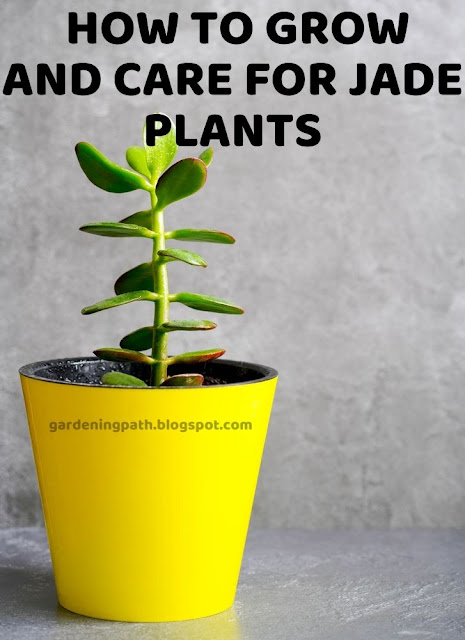
HOW TO GROW AND CARE FOR JADE PLANTS

Image
Jade plants are succulent houseplants, which makes them fairly resilient and easy to grow indoors—plus, they’re long-lived. Jade plants were absolutely everywhere in the 1970s — they were the quintessential houseplant growing in hanging macramé planters. Now macramé is hot again and, thankfully, jade plants really never went away. That’s because they are some of the easiest houseplants to grow.  With their thick, woody stems and oval-shaped leaves, jade plants have a miniature, tree-like appearance that makes them very appealing for use as a decorative houseplant. They live for a very long time, often being passed down from generation to generation and reaching heights of three feet or more when grown indoors. Jade plants adapt well to the warm, dry conditions found in most homes. Many people enjoy growing jade plants in their homes and offices, and they are considered to be symbols of good luck. But you do not need to be lucky to learn what the proper care and maintenance of jade ...

HOW TO PROPAGATE SNAKE PLANT CUTTINGS IN WATER

Image
Sansevieria trifasciata (also known as the Snake Plant or Mother-In-Law's Tongue) is one of the most popular and hardy species of houseplants. This succulent plant is very forgiving and perfect for beginners. Sansevierias have several names: Snake Plant, Mother In Law Tongue, Bowstring Hemp Plant, or Devil’s Tongue. They are some of the easiest and most beautiful plants to grow,  Sansevieria plants are great for indoors and mild climates outdoors.  Native to southern Africa, snake plants are well adapted to conditions similar to those in southern regions of the United States. Because of this, they may be grown outdoors for part of all of the year in USDA zones 8 and warmer. However, they spread by sending out underground runners and may become invasive, so treat snake plants like you would bamboo; plant it only in contained areas or pots. SNAKE PLANT PROPAGATION Learning how to propagate snake plants is easy. It’s true that too much water can kill your plant, but rooting a sna...

The Devil’s Ivy Plant - Care and Growing Guide

Image
What if I told you that the devil’s ivy plant was given that name because it’s nearly impossible to kill? The Golden Pothos, or the Epipremnum aureum, is native to Southeast Asia. It has the reputation of being one of the easiest houseplants to take care of. Its common name, Pothos, comes from the genus is was once classified under Pothos aureus. The Golden Pothos is known for its heart-shaped green leaves with variegation in yellow. In the wild, it is known to overgrow forest floors and tree trunks due to its aerial root system. In good indoor conditions, you can expect the Golden Pothos to trail to 10 feet long or more. If a moss pole or other type of support is provided, the devil’s ivy plant will create a beautiful climbing houseplant. The Pothos is particularly fitting for indoor settings because it is able to filter gaseous toxins like formaldehyde from the air. Devil’s Ivy: hanging or climbing plant? Due to its trailing and climbing qualities, the plant can be sold as either a h...

14 Strange And Beautiful Houseplants You Need To Know About

Image
Houseplants make a dramatic difference in our decor. They add colour, vibrancy, and life to our homes. Do you love using houseplants in your decor too? These strange and beautiful houseplants are a sight to behold.  Houseplants help you to breathe easier too as they release oxygen. During the night, photosynthesis ceases, and plants typically respire like humans – they absorb oxygen and release carbon dioxide – isn’t nature amazing? Essentially, they help purify the air too!  Here’s a list of some strange and yet beautiful houseplants for you to enjoy.  1. Trachyandra Trachyandra is a genus of plants similar to Albuca and is native to South Africa. It features a curly squiggly branch and reminds me of curly pasta! Each branch is unique and has perfect symmetry. I can see bunches of them in a huge pot on my windowsill! You can also feature just one plant in a little pot too – perfect to perk up your bathroom!  2. Dolphin Succulents  The internet is on fire becaus...

Yucca Growing | How To Care For A Yucca Houseplant

Image
If your friendly yucca plants become yellow or may discover black spots on leaves then there may be chances of spoiling the growth of yuccas from blooming flowers. You need not worry as this problem can be easily solved by applying natural fertilizers and by providing sufficient water and sunlight to the plants. The Yucca plant is a perennial shrub in the family of Asparagaceae that is abundantly seen in the Caribbean and American countries. It is a super air-purifying plant and grows well in hot and dry climatic conditions. Plant leaves, stems and roots are poisonous if consumed directly. Though the plant is poisonous it contains powerful antioxidants that help to cure stomach ache, headache, and other skin-related problems in humans. Here in this article, we shared the detailed information related to the yucca plants, growing conditions and how it is helpful in your daily life to lead a happy life. Companion Plants Yucca combination plants include euphorbia, sedum, lilies, sage, rudb...

How to Care for Christmas Cactus Plants

Image
Christmas cactus plants (Schlumbergera bridgesii_) are epiphytes that grow naturally in trees in Brazil. They absorb moisture and nutrients from debris that gets caught in the tree branches. Commonly grown as houseplants, they can also be grown outdoors in pots in U.S. Department of Agriculture plant hardiness zones 9 to 11, as long as they are brought indoors if the weather gets too cold. They can survive temperatures down to 20 degrees Fahrenheit, but their stems will be severely damaged. Rooting a New Christmas Cactus To root a brand new cutting of a Christmas Cactus, be sure to plant in a mixture of moist peat and sand soil. You'll want to place the cactus into the soil about a quarter of an inch. Also, be sure not to overwater your newly rooted cactus to avoid rot. Once fully rooted, you can move your plant to a pot with potting soil for a permanent home. Light and Temperature Place indoor Christmas cactus plants in bright, indirect light. Right next to south-, west- or east-f...

How to Care for ( Monstera adansonii ) Swiss Cheese Vine Plant

Image
The Monstera adansonii is a more petite relative of the insta-famous Monstera deliciosa and quite often mislabelled as Monstera obliqua, a rarer family part. With the proper care, the cheese vine plant makes an excellent evergreen indoor houseplant. Because it doesn’t spread as fast as the Monstera deliciosa, it is ideal for shorter spaces. Smaller size, but still a notable impact. It can climb or trail; therefore, your Monstera adansonii is excellent for keeping as an indoor hanging plant or on a shelf where it can cascade down. Monstera adansonii Care Tips Know the basics on how to best care for your Monstera adansonii and make it thrive. It’s not hard, but it does require a little attention. Light It is good to know where the Monstera adansonii originates from. What is the native habitat? Knowing this you can try and and mimic this for your plant in your home. The Monstera adansonii comes from the jungles of Central and South America. In the wild, they grow on tree trunks under cove...